Tranexamic Acid Moisturizer
There’s a tranexamic acid moisturizer sitting in a lot of routines right now, and almost none of the packaging mentions where the ingredient actually came from. It didn’t start in a cosmetic lab. It started in an IV bag.
Before TXA Became Skincare,It Was a Hemorrhage Drug

Tranexamic acid has been an FDA-approved prescription medication since 1986, used intravenously and orally to stop severe bleeding — postpartum hemorrhage, surgical blood loss, heavy menstrual bleeding. It works by blocking plasmin, the enzyme that breaks down blood clots, which is a fancy way of saying it keeps you from bleeding out.
The skincare discovery was an accident. A doctor treating a patient’s chronic skin rash with oral tranexamic acid noticed her melasma faded significantly after a few weeks on the drug. That side effect became the entire second act of this ingredient’s career.
The Three Clinical Forms TXA Cream Descended From

Before it landed in a jar, the same active traveled through two more clinical stops, and each one carries a different risk profile:
- IV and oral — still the medical standard for hemorrhage control, with real contraindications around clotting disorders and thromboembolism history.
- Injectable and microneedling — used in dermatology offices for stubborn melasma. A March 2026 trial out of Aarupadai Veedu Medical College found TXA delivered via microneedling reached near-clearance in roughly 83% of patients, compared to 37% for intradermal injection — delivery method changed the outcome more than the dose did.
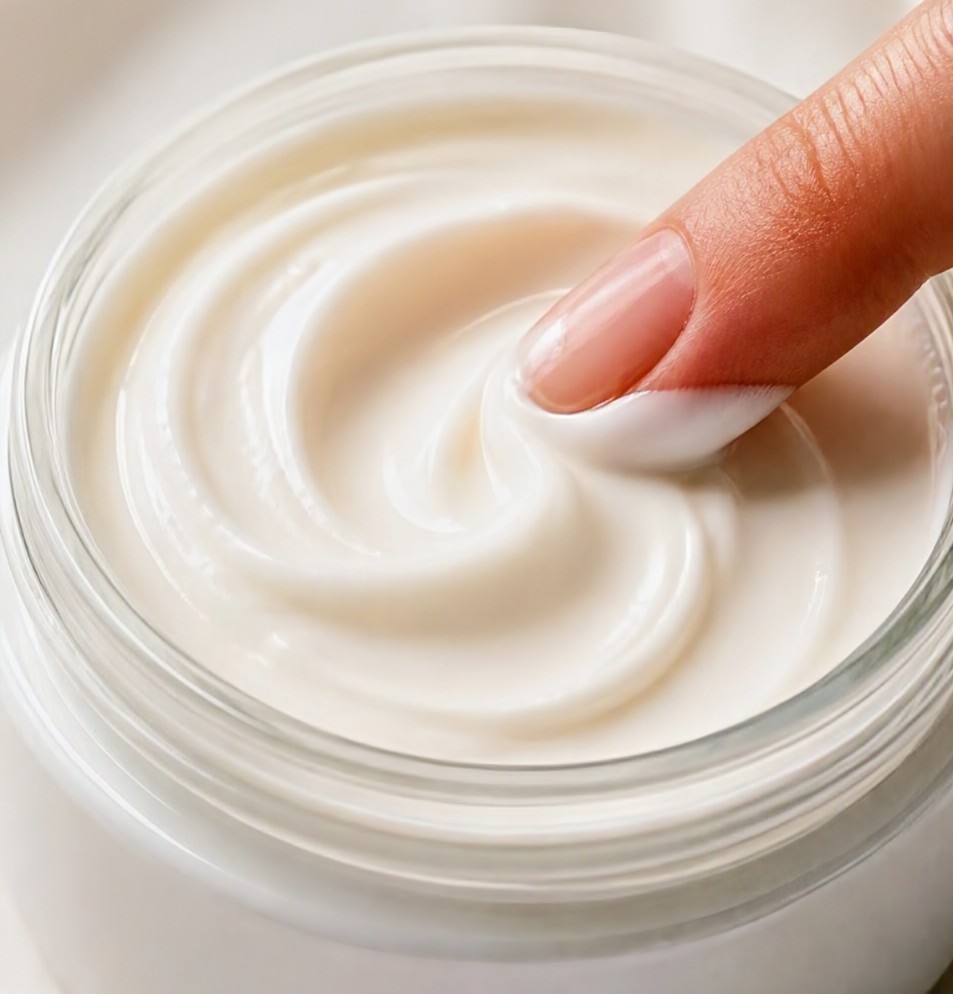
- Topical cream and moisturizer — the newest and most diluted form, where absorption is minimal enough that dermatologists consider it appropriate for most skin types.
Why TXA in Moisturizer Form Works Differently Than a Serum

Most of the tranexamic acid conversation online is still serum-first — that’s where the ingredient built its reputation for fading dark spots and calming inflammatory pigment triggers. Moisturizer is the newer move, and it’s a formulation bet: brands are counting on the cream base to extend contact time and pair the active with barrier-supporting ingredients, rather than relying on a fast-absorbing, high-concentration serum alone.
Is a Tranexamic Acid Cream Actually Safe?
For topical use, yes — research published via the National Institutes of Health describes tranexamic acid as a well-tolerated option for melasma and post-inflammatory hyperpigmentation, with a safety profile distinct from its injectable and systemic forms. The distinction matters: a cream sitting on the surface of your skin is not doing what an IV drip or an intradermal injection is doing, even though the molecule is identical. Delivery route, not just concentration, is what determines how much of the drug’s original clot-stabilizing mechanism actually reaches your system.
This is also where tranexamic acid moisturizer earns its place next to Harmoni’s ongoing look at where beauty and wellness are converging — a repurposed pharmaceutical, sold over the counter, doing quiet double duty as a skincare active. It’s the same pattern we’ve been tracking all year: medicine’s back door becoming beauty’s front shelf.
The Bottom Line on Tranexamic Acid Moisturizer
It’s not a new ingredient pretending to be exciting — it’s an old drug getting a new, much gentler assignment. The story worth telling isn’t “does it work.” It’s that the same active ingredient shows up in a syringe, a needle cartridge, and a jar, and each of those has a different conversation with your body. The jar is the only one that gets to skip that conversation entirely — for good reason, but it’s worth knowing why.