The Long Game
What Japan and Korea have always known — and what America is finally buying.
There is a particular kind of wisdom that does not announce itself. It does not come in a sleek canister, a subscription box, or a smart ring notification. It comes from centuries of living — quietly, intentionally, in rhythm with the body rather than against it. The East has always known this. America is just now catching up.
The Origin
Japan is home to over 95,000 centenarians. Nearly 88 percent of them are women. Okinawa — one of the world’s five Blue Zones — is not a wellness destination. It is simply a way of being.
The Japanese do not have a longevity stack. They have ikigai — a reason for being that keeps them mentally sharp and socially engaged well into their nineties. They have moai — lifelong community circles that provide emotional, financial, and physical support across a lifetime. They have hara hachi bu — the practice of eating to 80 percent fullness, not as a diet, but as a relationship with food cultivated from childhood.
Korean longevity runs a parallel thread. Fermented foods — kimchi, doenjang, rice-based probiotics — are not health food aisle purchases. They are daily practice, passed through generations. Korean red ginseng has 127 years of documented science behind it. What Americans are now discovering in wellness boutiques, Koreans have been drinking in daily tonics for generations.
Korean red ginseng — 127 years of documented science.
The Translation
America’s longevity market is now a structural reality. Sixty percent of Americans cite healthy aging as their top wellness motivator. The supplement market has responded — NAD+ boosters, NMN, resveratrol, creatine, AG1, adaptogens now fill medicine cabinets where multivitamins once lived.
Creatine — once the domain of bodybuilders — is now mainstream for women, showing up in beauty formulas and brain-health blends. Polyphenol-rich foods like wild berries, high-phenolic olive oil, and fermented vegetables are being repositioned as longevity tools. The language of cellular health has entered everyday conversation.
Some of this is signal. Adaptogens like ashwagandha and rhodiola have genuine roots in Eastern and Ayurvedic practice. Korean red ginseng is backed by serious research on cognitive function, immune health, and sustained energy. Fermented foods supporting the microbiome — that is not trend, that is biology.
Some of this is noise. A supplement cannot replace ikigai. A longevity stack cannot replicate moai. America has a tendency to extract the product from the philosophy and sell it without the context.
The Wrist
The wearable is America’s answer to Eastern body awareness. The Oura Ring, WHOOP, and Apple Watch have become the data layer of the longevity conversation — tracking heart rate variability, sleep architecture, recovery readiness, and biological age in real time.
“Japanese walking” — a Nordic-style interval walking method rooted in Japanese longevity research — surged 2,986 percent in search interest in 2026. Americans are adopting Eastern movement philosophy through technology rather than through culture. The form arrives without the philosophy. The data arrives without the discipline.
This is not a criticism. It is an observation. Wearables at their best function as mirrors — not judges, but quiet reflectors of patterns. The Oura Ring does not tell you to slow down. It shows you what happens to your HRV when you don’t.
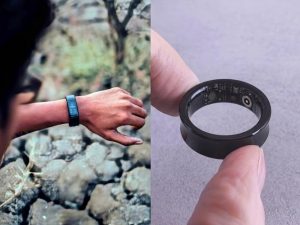
The wearable as mirror — not judge.
Hana’s Signal Picks
What’s worth your investment — and what has roots
Hana’s Signal Picks: Some links in this Signal are to products Harmoni Studios researches and uses. If you choose to purchase, we may earn a small commission at no extra cost to you. We only share tools aligned with our longevity and values.
Wellness Note: This article is for informational purposes only and reflects cultural practices from Japan and Korea alongside modern research. It is not medical advice. Always consult your healthcare provider before starting any supplement, including NMN, resveratrol, or Korean red ginseng.
127 years of research. Cognitive function, immune health, sustained energy. JungKwanJang is the standard.
75 vitamins, minerals, and whole-food sourced nutrients. The most complete daily foundation on the market.
HRV, sleep architecture, readiness score. The most accurate sleep and recovery ring available.
NAD+ precursor with cellular energy research behind it. Look for third-party tested formulations only.
The East did not invent longevity as a product. America did.
What Japan and Korea offer is not a supplement protocol or a wearable stack. It is a structural relationship with time — with food, with community, with purpose, with rest.
The most powerful longevity tool in Japan has no SKU. It is the question they ask themselves every morning: Why do I wake up?
That one costs nothing. And it may be the most evidence-based intervention of all.