Beauty Was Always An Inside Job
How Japan and Korea Built the Category the West Is Just Now Discovering.
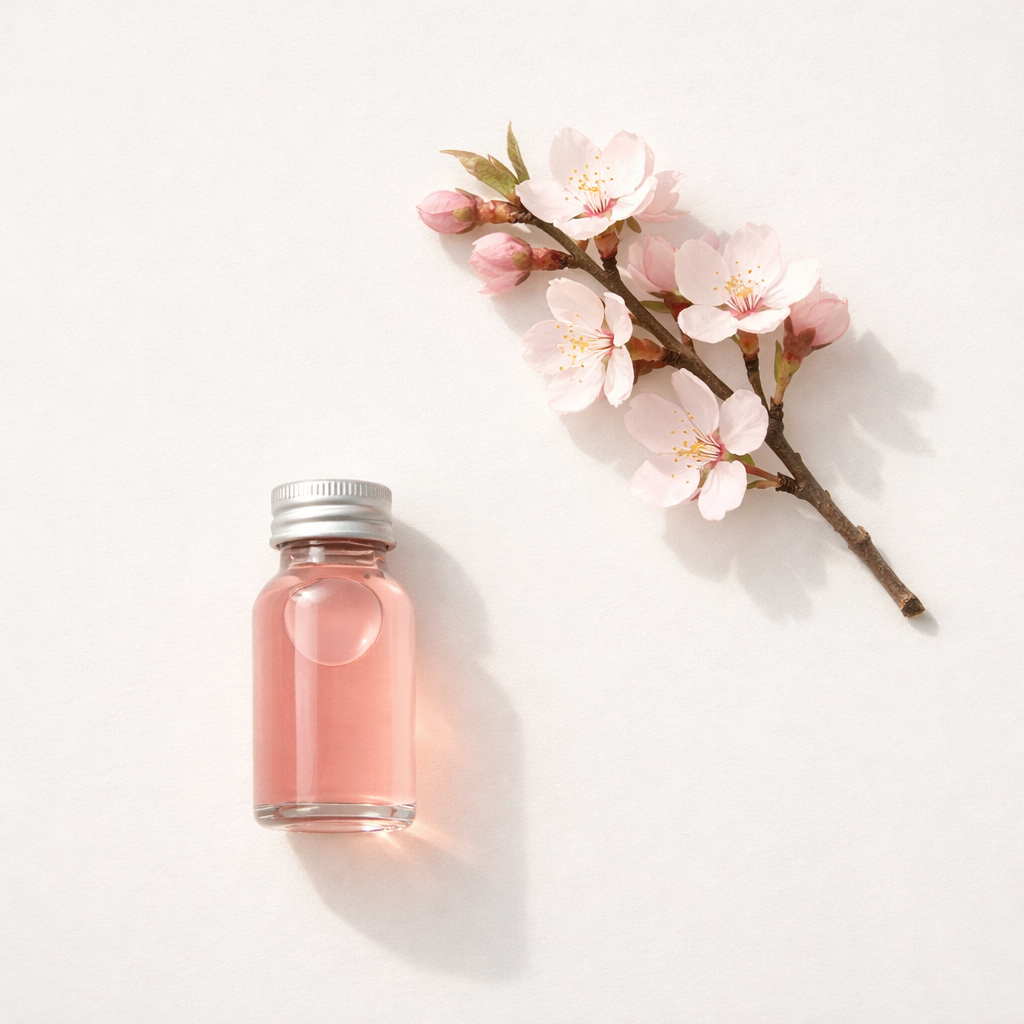
There is a small glass bottle that has been sitting on pharmacy shelves in Tokyo since the mid-2000s. It contains collagen, vitamin C, and nothing complicated. It doesn’t have a lifestyle story. It doesn’t have a wellness moment built around it. It was designed to do one thing — support skin from within — and the consumer who bought it understood exactly what she was purchasing and why.
 t
t
The West did not invent ingestible beauty. It inherited it. And the story of what happened between that pharmacy shelf in Tokyo and the pastel drink stick on a western retailer’s shelf today is a study in how culture travels — and what gets left behind when it does.
The Culture Lane: Japan
Japan’s relationship with beauty from within is not a trend. It is a philosophy embedded in how the culture understands skin health at a foundational level. Japanese skincare has always operated on a dual axis — what you apply and what you ingest — and that framework predates the modern supplement industry by centuries.
Collagen-rich foods were already part of the Japanese dietary tradition long before they became a commercial category. Fish skin, bone broth, and sea vegetables provided structural proteins as a matter of daily life, not supplementation. When Japanese beauty companies began formalizing that practice into commercial products in the 1980s and 1990s — collagen drinks appearing alongside the boom in high-tech skincare — it was a natural extension of something the culture already understood.
Japan’s 1980s and 1990s saw a boom in high-tech skincare: skin-lightening creams regulated as quasi-pharmaceuticals, collagen drinks, and gadgets like facial massagers became popular, as Japanese beauty companies built sprawling research centers. The collagen drink wasn’t disruptive in Japan. It was logical.
By 2006, major Japanese beverage manufacturers were producing collagen water with added vitamin C — the complete formulation the research required — in standard convenience store formats. This was not a premium product. It was an everyday one, purchased with the same pragmatism as a multivitamin.
Japanese beauty philosophy, at its core, prizes prevention over correction and long-term consistency over dramatic intervention. The collagen drink fits that philosophy precisely. You take it daily. You don’t expect a transformation. You expect maintenance — the steady support of something the body does less efficiently over time.
The Culture Lane: Korea
Korea arrived at ingestible beauty through a different cultural door but reached the same destination. Where Japanese beauty philosophy emphasizes simplicity and prevention, K-beauty has historically leaned toward innovation, layering, and visible radiance — what the culture calls chok chok, the luminous, hydrated skin that became its global signature.
In Korea, beauty is no longer framed only as what you apply on the skin. Inner beauty has become part of the wider K-wellness shift, with collagen drinks, glutathione supplements, and probiotics marketed for glow, resilience, and healthy aging. That shift didn’t happen overnight. It developed from a cultural belief, rooted in centuries of Korean tradition, that appearance and inner health are inseparable. In the past, Koreans believed that their appearance could influence their inner selves, attributing significant importance to it.
Korea’s traditional herbal medicine practice — hanbang — contributed the philosophical architecture. Ginseng, green tea, mugwort: ingredients taken internally to support health, skin among them. When modern Korean beauty science built on that foundation, adding clinical formulation to traditional intent, the inner beauty category emerged as something both ancient and rigorously contemporary.
In Korea, the choice of drinks changes with the seasons — Koreans often start with a healthy drink in the morning, while collagen drinks are enjoyed before bed to support skin repair during sleep. That level of integration — time-of-day specificity, seasonal awareness, daily ritual — reflects a category that has been fully absorbed into cultural practice, not one that is being discovered.
What the Export Lane Left Out
Before Western brands caught on, collagen infused beverages were already well-established in parts of Asia prior to the 2010s — specifically Japan and South Korea, who have been industry leaders for beauty and skin health and have long embraced commercial collagen products, making them early adopters of collagen drinks, shots, and mini-bottles.
When the concept crossed into Western markets, the ingredient came with it. The philosophy largely did not.
The Western wellness market reframed ingestible collagen as a lifestyle product rather than a long-term health practice. The packaging became the point. The ritual became the marketing. The clinical precision — dosage specificity, the role of vitamin C, the importance of consistency over time — got compressed into language that prioritized aspiration over instruction.
Many products are sold with language that feels more definite than the evidence allows. Some are positioned as if they can replace skincare, procedures, sleep, or diet quality. They cannot. Inner beauty works best when it is understood as supportive, not magical.
This is the export lane. It takes what a culture developed through decades of practice and clinical refinement, wraps it in an aesthetic story, and delivers it to a consumer who has none of the cultural context that made the original product make sense. The consumer is not wrong to want the outcome. But she is often buying a translation without access to the original text.
What Japan and Korea Know That the Label Doesn’t Tell You
Both J-beauty and K-beauty practice ingestible collagen as infrastructure, not intervention. The distinction matters.
Infrastructure is what you maintain quietly, consistently, over years. It doesn’t announce results on a four-week timeline. It doesn’t require a before and after. It works because it is uninterrupted — because the body receives consistent support and responds over time in ways that are cumulative rather than dramatic.
Among the major supplement categories promoted for skin appearance, oral collagen has the most consistently positive evidence base — multiple systematic reviews and meta-analyses have found improvements in skin hydration and elasticity with oral collagen supplementation, especially when hydrolyzed collagen peptides are used consistently for several weeks.
Consistently. For several weeks. That is the Japanese and Korean consumer’s native understanding of how this category works. It is not the Western marketing promise.
The other thing both cultures know: ingestible collagen is one element of a layered approach, not a standalone solution. The Korean multi-step routine exists because no single product carries the full weight of skin health. The Japanese emphasis on diet, sleep, and topical care alongside supplementation reflects the same understanding. The drink stick alone, without the rest of the practice it was designed to support, is a fragment of a system.
What Hana Sees
The global lens here is not about which country’s collagen drink is superior. It is about what happens when a category that was built on cultural depth and clinical rigor gets exported as an aesthetic moment.
The ingredient is real. The science is real. What the West is still learning is the orientation — that beautiful skin from within is not a launch. It is a practice. Japan and Korea have known that for decades. The rest of us are just now reading the translation.
— Harmoni Studios