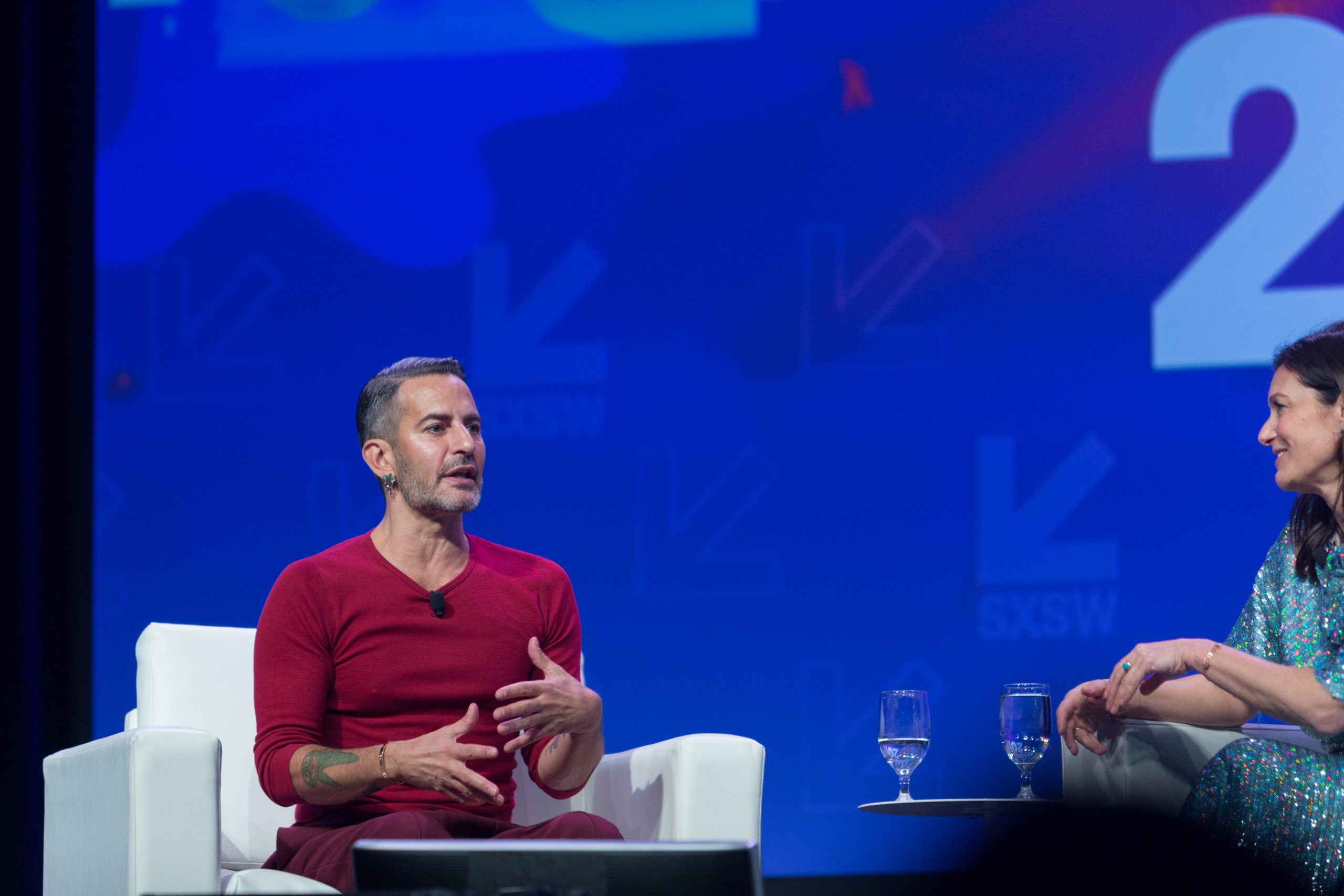
Marc Jacobs, Sold
Vanity Fair put Marc Jacobs on its 2026 Style issue and called him American culture. Painter Anna Weyant rendered him in her Old Masters style — dark background, direct stare, a line from Walt Whitman running under his name. It’s a beautiful cover. It is also, if you read past the portrait, a eulogy dressed as a celebration, especially now that Marc Jacobs sold.. Even Vanity Fair’s own Global Editorial Director, Mark Guiducci, hinted at it days before the issue dropped, telling Vogue’s The Run-Through podcast that Jacobs has had nine lives — and might be on his seventh.
Because the real story isn’t the painting. It’s the timing. This is Jacobs’s first interview since the Marc Jacobs LVMH sale was announced — the deal that hands his namesake label to a new owner and, with it, hands off the answer to a question Vanity Fair never quite asks directly: is this still a fashion house, or is it now just a licensing asset with a famous name on it?
Why LVMH Sold Marc Jacobs
Here’s what often gets flipped around: LVMH isn’t buying Marc Jacobs. LVMH has owned the label since 1997. LVMH is the one selling — to a joint venture between WHP Global and G-III Apparel Group, in a deal reported at roughly $850 million and expected to close by October.
That reversal matters. A house that once anchored LVMH’s American ambitions is now being handed off after nearly three decades, at the exact moment Vanity Fair is calling its designer the most emblematic figure in American fashion. The crown and the exit paperwork arrived in the same season.
Marc Jacobs on Being Sold

Jacobs didn’t play along with the tribute. In the Vanity Fair interview, he said LVMH had done the least possible to grow the business over the years — a rare public grade from a designer to the conglomerate that made him famous. He also took a jab at the incoming ownership, describing G-III’s reputation in the industry as less elegant, a nod to the fact that G-III mostly operates licensed labels rather than designer-led houses.
That’s two blunt reviews, back to back, of the company that owned him and the company about to own him next. It’s not the language of someone being celebrated. It’s the language of someone doing inventory.
The Man Who Sold Jessica Simpson Too

Here’s the detail that turns this from a fashion story into a business story: one of the two men now taking over Marc Jacobs, Yehuda Shmidman, has done this exact deal before. In 2015, as CEO of Sequential Brands Group, Shmidman acquired a majority stake in the Jessica Simpson Collection — describing Simpson at the time as an icon with best-in-class licensees, in almost the same language now being used to frame Jacobs.
Same dealmaker. Same pitch. Two very different kinds of American brand — one built on runway vision, one built on retail volume — being folded into the same licensing machine, fifteen years apart.
What Selling Jessica Simpson Taught the Industry

Simpson’s brand didn’t stay in that machine. It went bankrupt under Sequential-era ownership in 2021. Simpson and her mother bought back full control that same year, and the label now runs at over a billion dollars in retail sales — owned outright, not licensed out.
That’s the fork sitting in front of Marc Jacobs right now, whether Vanity Fair names it or not: stay a creative employee inside someone else’s licensing structure, or fight, eventually, to own the name again.
The Business Behind the Marc Jacobs Sale
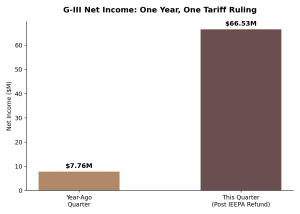
It’s worth remembering what kind of company is actually taking the wheel. G-III’s own recent results have swung on tariff policy and Supreme Court rulings, not runway reception — import costs from Vietnam and Bangladesh, an IEEPA tariff refund, a sales forecast cut and then a profit surge, all inside the same year. Whoever ends up steering Marc Jacobs day to day inherits that reality along with the archive.
Sold, Either Way
Vanity Fair’s cover says American culture. The deal memo says licensing math, tariff exposure, and a dealmaker running his second identical playbook. Both are true at once — that’s exactly the gap worth sitting in. The Marc Jacobs LVMH story was never really about a portrait. It was about who gets to decide what a name is worth once the person behind it stops being the one deciding.
Sources
- Artnews — “Anna Weyant Paints Marc Jacobs for ‘Vanity Fair’ Cover”
- Fashion Week Daily — “Marc Jacobs Calls Out LVMH for Doing ‘The Least Possible'”
- Fashionista — “Must Read: Marc Jacobs Covers Vanity Fair”
- Vogue — The Run-Through Podcast, Mark Guiducci interview
- License Global — “Sequential Buys Jessica Simpson Brand”
- TODAY — “Jessica Simpson Reclaims Full Ownership of Her Fashion Brand”
- Stocktwits — “G-III Apparel CEO Says Company Absorbing Some Tariff Costs”
- StockTitan — G-III Apparel Group 10-Q, tariff refund
- Featured image: Luca Fazzolari / Wikimedia Commons (CC BY-SA 4.0)